
Launching a new business comes with dozens of competing priorities and a limited budget stretched across all of them. So where does investing in SEO Services in Pakistan actually fit for a brand-new business, and is it genuinely worth prioritizing this early? Here is an honest, balanced look.
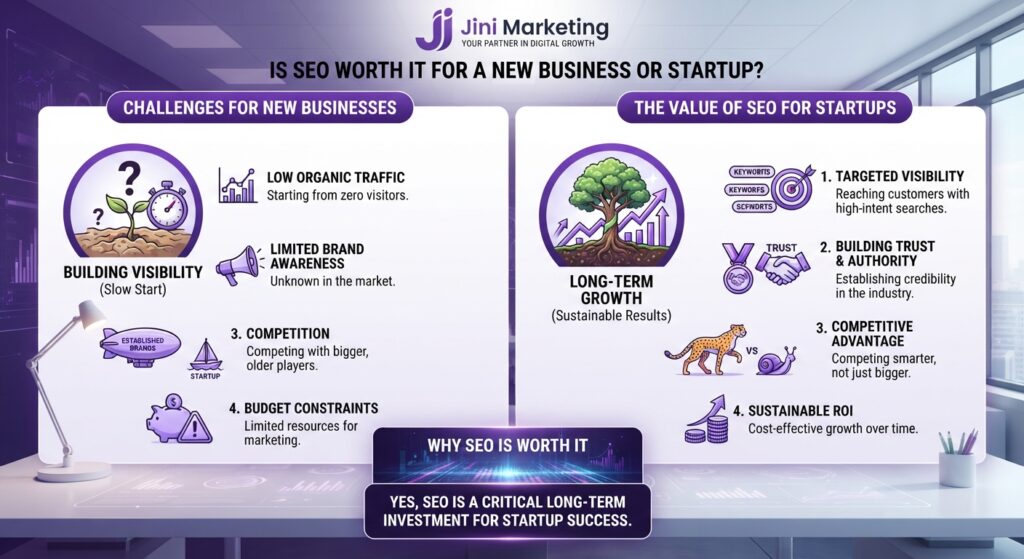
Why SEO Feels Like a Tough Call for New Businesses
Unlike some marketing channels that can produce quick, measurable results, SEO typically takes 4-6 months to show meaningful movement—a timeline that feels genuinely long when you’re a new business trying to establish initial traction and validate your model. This legitimate tension is worth acknowledging honestly rather than dismissing.
The Case for Starting SEO Early
- Domain age genuinely matters: Google tends to trust older, more established domains somewhat more than brand-new ones, all else being equal. Starting your SEO foundation early even at a modest pacemeans your domain begins accumulating age and trust sooner, benefiting your business later even if visible results take time.
- Early content compounds: Content published in your first months continues working for you long after it is published, unlike advertising spend that stops producing value the moment you stop paying. Starting this compounding process early, even modestly, pays off more over a 2-3 year horizon than starting later.
- You’re building alongside your business: If you wait until you’re an established business to start SEO, you’re often competing against businesses that started their SEO investment years earlier, making the climb steeper than if you’d started building alongside your business growth from the beginning.
- Foundational technical work is easier: Fixing technical SEO issues on a smaller, newer website is often simpler than untangling years of accumulated technical debt on a larger, more complex site later.
The Case for Waiting (At Least Initially)
- Product-market validation matters more urgently: If you haven’t yet confirmed genuine demand for what you’re offering, investing significant budget in a channel that takes months to show results may be premature compared to validating your core offering first through faster feedback channels.
- Limited budgets can be stretched too thin: If SEO investment would mean inadequate resources for other truly urgent early-stage needs (product development, initial customer acquisition through faster channels), it may be more strategic to delay SEO slightly until initial footing is more stable.
- Keyword strategy can shift: Early-stage businesses sometimes pivot their positioning, messaging, or target audience based on initial market feedback investing heavily in SEO content before this clarity is established risks needing to redo significant work later.
A Middle-Ground Approach for Most Startups
Rather than an all-or-nothing decision, many successful startups find value in a scaled, modest SEO investment from the early stages, growing as the business stabilizes:
- Start with foundational technical SEO ensuring your site is properly indexed, mobile-friendly, and technically sound since this groundwork is relatively low-cost and prevents future problems.
- Begin with lighter content investment, such as 1-2 well-researched blog posts monthly, rather than a large-scale content operation. This starts the compounding process without requiring a large budget commitment during a financially uncertain early stage, especially when working with providers offering flexible SEO Services in Pakistan suited to startup budgets.
- Scale up as revenue and confidence grow once initial product-market fit feels more solid and cash flow allows, increasing SEO investment becomes a more comfortable, lower-risk decision than committing heavily from day one.
Questions to Help You Decide for Your Specific Startup
- Do I have genuine confidence in my product-market fit, or am I still actively validating it?
- Is my budget tight enough that any SEO spend would meaningfully compromise other urgent early needs?
- Do I have at least a 6-12 month runway to allow SEO’s typical timeline to start showing results?
- Is my target audience one that typically searches for solutions like mine on Google, or do they discover businesses like mine through other channels primarily?
Answering these honestly for your specific situation clarifies the decision far better than a generic yes-or-no rule applied universally.
What Happens If You Delay SEO Entirely
It’s worth being clear-eyed about the trade-off of waiting: every month without any SEO foundation means competitors (who may have started earlier) continue building domain authority and content depth, widening the gap you’ll eventually need to close. This doesn’t mean every startup must start immediately, but it does mean waiting indefinitely carries a real, compounding cost worth factoring into the decision.
How Established Providers Approach New Businesses Differently
Experienced providers of SEO Services in Pakistan typically adjust their strategy meaningfully for startups compared to established businesses often starting with more conservative, achievable keyword targets, building foundational technical health first, and scaling content investment gradually rather than assuming a large budget from day one. If you’re a startup considering this investment, discussing a startup-appropriate scope directly with a potential provider often reveals more flexible, budget-conscious options than a standard enterprise package might suggest.
Making the Right Call for Where You Are Right Now
There’s no universally correct answer to whether a brand-new business should invest in SEO immediately it depends genuinely on your specific runway, confidence in your product-market fit, and how central search-based discovery is likely to be for your particular business model. What matters is making this decision deliberately, with clear eyes about both the compounding cost of waiting and the real budget trade-offs of starting early, rather than defaulting to either extreme without genuine consideration.
Frequently Asked Questions
- Should a brand-new startup invest in SEO immediately?
It depends on your runway and confidence in product-market fit. Many startups benefit from a modest, foundational SEO investment early, scaling up as the business stabilizes rather than an all-or-nothing approach. - Does domain age really matter for SEO rankings?
Yes, to some degree. Older, more established domains tend to carry somewhat more trust with Google, meaning starting SEO earlier allows your domain to begin accumulating this trust sooner. - How much should a startup budget for SEO in the early stages?
This varies widely, but many startups begin with a lighter, foundational investment (basic technical work and modest content volume) rather than a large-scale package, scaling up as revenue and confidence grow. - Is it better to validate my business idea before investing in SEO?
For many startups, yes—validating genuine demand through faster feedback channels first can be more urgent than SEO investment, which typically takes months to show meaningful results. - What happens if a startup waits too long to start SEO?
Competitors who started earlier continue building domain authority and content depth, making the eventual catch-up steeper the longer SEO investment is delayed. - Can a new business compete in search rankings against established competitors?
Yes, though it typically takes longer than for an established site. Starting with achievable, specific long-tail keywords rather than highly competitive broad terms is usually the smarter initial approach for new businesses. - Should startups do SEO themselves or hire a professional?
This depends on available time, budget, and internal expertise. Some startups begin with DIY foundational work, while others prefer professional guidance from the start to avoid early, costly missteps. - How long before a startup sees results from SEO investment?
Similar to established businesses, meaningful results typically take 4-6 months to begin appearing, with stronger momentum building further by 8-12 months of consistent effort. - Is SEO a good long-term investment for a startup even if results are slow?
Yes, generally—SEO builds a compounding asset that continues generating value over time, unlike advertising spend that stops producing results the moment you stop paying. - What’s a reasonable first SEO priority for a brand-new business?
Foundational technical SEO (ensuring your site is properly indexed and mobile-friendly) combined with a modest, consistent content strategy is typically a reasonable, budget-conscious starting point for most startups.