If you’re new to SEO services in Pakistan, it’s completely normal to feel uncertain about basic terminology and concepts before committing budget to it. This guide covers the foundational questions almost every business owner has when first exploring SEO, explained in plain language without unnecessary jargon.
What Does SEO Actually Stand For, and What Does It Do?
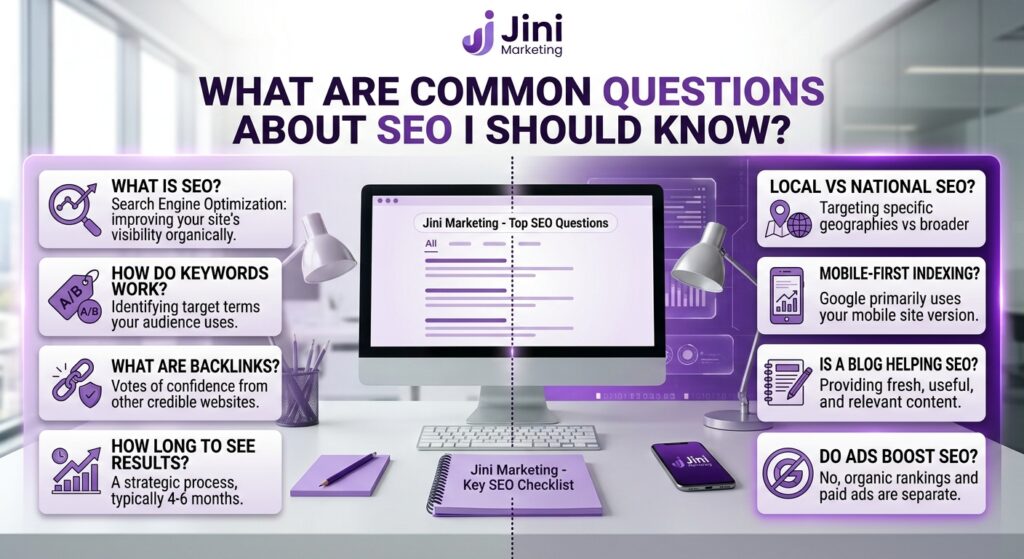
SEO stands for Search Engine Optimization the practice of improving your website so it appears higher in search engine results (primarily Google) for terms relevant to your business, without paying for each click the way advertising requires.
What’s the Difference Between SEO and SEM?
SEM (Search Engine Marketing) is the broader category that includes both SEO (organic, unpaid results) and PPC/paid search advertising (like Google Ads). SEO builds long-term visibility gradually; paid search buys immediate visibility for as long as you keep paying.
What’s a Keyword, and Why Does It Matter?
A keyword is simply the specific word or phrase someone types into a search engine. SEO strategy is built around understanding which keywords your potential customers actually use, then creating content and optimizing your site around those specific terms.
What’s the Difference Between On-Page and Off-Page SEO?
On-page SEO refers to everything you control directly on your own website content, title tags, headings, internal links, and technical structure. Off-page SEO refers to factors outside your website, primarily backlinks from other sites, that signal credibility and authority to search engines.
What Is a Backlink, and Why Do They Matter So Much?
A backlink is simply a link from another website pointing to yours. Search engines treat backlinks somewhat like votes of confidence when credible, relevant sites link to you, it signals to Google that your content is trustworthy and valuable, which can meaningfully improve your rankings.
What Does “Domain Authority” Mean?
Domain authority is a metric (developed by third-party SEO tools, not an official Google metric) that estimates how likely a website is to rank well, based largely on its backlink profile and overall site quality. Higher domain authority generally correlates with stronger ranking potential, though it’s a helpful indicator rather than a guaranteed predictor.
What’s a Meta Description, and Does It Affect Rankings?
A meta description is the short summary text that appears below your page title in search results. While it doesn’t directly influence rankings, a well-written meta description significantly affects whether people actually click on your listing making it an important conversion factor even if not a direct ranking one.
What Does “Indexing” Mean?
Indexing refers to Google adding your webpage to its massive database of known pages, making it eligible to appear in search results at all. A page must be indexed before it can rank for anything if a page isn’t indexed, it simply won’t show up in search results regardless of how well-optimized it is.
What’s the Difference Between Organic and Paid Search Results?
Organic results are the “free” listings that appear based on SEO relevance and quality, while paid results are advertisements marked clearly as “Sponsored” or “Ad” that businesses pay for directly. Both appear on the same search results page, but they’re generated through completely different mechanisms.
What Is a Google Algorithm Update, and Why Does It Matter?
Google regularly updates the algorithms that determine search rankings, sometimes with significant impact on how sites are ranked. These updates are why SEO isn’t a “set it and forget it” activity strategies that worked previously sometimes need adjustment as Google’s evaluation criteria evolve over time.
What Does “Mobile-First Indexing” Mean?
Google now primarily uses the mobile version of your website (rather than the desktop version) to determine rankings, reflecting how most searches now happen on mobile devices. This makes mobile-friendly design a genuinely critical, not optional, part of any SEO strategy today.
What’s the Difference Between Local and National SEO?
Local SEO targets geographically-specific searches (like “near me” queries) and relies heavily on factors like Google Business Profile optimization, while national SEO targets broader search terms without geographic restriction. Understanding which applies to your business is a foundational early decision in any SEO strategy.
Why Does This Terminology Matter for a Business Owner?
You don’t need to become an SEO expert yourself, but understanding these core concepts helps you evaluate potential providers more effectively, ask better questions during consultations, and understand the reporting and recommendations you’ll receive once you start working with a professional. When researching SEO services in Pakistan, being able to follow the conversation confidently rather than nodding along to unfamiliar jargon — puts you in a much stronger position as a client.
A Few More Practical Questions Business Owners Often Ask
Does having a blog actually help SEO? Generally yes, since regularly published, genuinely useful content gives search engines more relevant pages to rank and demonstrates ongoing site activity and expertise in your field.
Do social media signals affect SEO rankings? The relationship is indirect social media doesn’t directly boost rankings the way backlinks do, but it can drive traffic and awareness that indirectly supports SEO goals, like earning natural backlinks from increased visibility.
Does website age matter for SEO? To some degree, since older domains have typically had more time to accumulate backlinks and trust signals but a newer site with excellent content and technical health can still outrank an older, neglected one over time.
Where to Go From Here
If these foundational concepts feel clearer now, the natural next step is understanding how they apply specifically to your business which keywords matter for your industry, what your current technical health looks like, and what a realistic strategy timeline would be. A proper consultation with a provider of SEO services in Pakistan can translate these general concepts into a concrete plan tailored to your specific situation.
Frequently Asked Questions
What does SEO mean in simple terms?
SEO means Search Engine Optimization improving your website so it appears higher in search results for terms relevant to your business, without paying for each individual click.
What’s the most important SEO concept for a beginner to understand?
Understanding the difference between on-page factors (things you control directly on your site) and off-page factors (primarily backlinks from other sites) provides a strong foundation for grasping everything else in SEO.
Do I need to understand technical SEO terms to hire an agency?
Not deeply, but understanding basic concepts helps you evaluate providers more effectively and follow their reporting and recommendations with more confidence.
What’s the difference between a keyword and a search query?
They’re often used interchangeably, though “keyword” typically refers to the target term in an SEO strategy, while “search query” refers to the exact phrase a specific user typed into Google.
Why do SEO professionals talk about backlinks so much?
Backlinks remain one of Google’s strongest trust and authority signals, functioning similarly to votes of confidence from other credible websites, making them a central focus of most SEO strategies.
What’s the easiest SEO concept for a business owner to start applying themselves?
Writing clear, accurate meta descriptions and title tags is one of the more accessible starting points, since it doesn’t require deep technical knowledge but meaningfully affects click-through rates.
Does Google explain how its ranking algorithm works?
Google provides general guidelines and best practices but doesn’t disclose the full, specific algorithm, since doing so would make it easier to manipulate rankings artificially.
What’s the difference between SEO and content marketing?
Content marketing focuses on creating valuable content to attract and engage an audience, while SEO specifically optimizes that content (and the broader website) to rank well in search engines the two overlap significantly but aren’t identical.
Is SEO terminology the same across every industry?
The core concepts remain consistent, though specific strategies and priorities can vary meaningfully based on industry, such as the added complexity of product-page optimization for e-commerce businesses.
How can I keep learning about SEO as a business owner?
Following updates from your SEO provider, reviewing your own Google Search Console data regularly, and asking clarifying questions during consultations all help build practical understanding over time without needing formal training.